Integrative Medicine Services: Combining Different Approaches to Care
Integrative medicine combines conventional and holistic care. See how a St. Petersburg clinic blends...

Explore breast enhancement options in Texas, including implants, fat transfer, and breast lifts. Learn about benefits, risks, recovery, and choosing a qualified surgeon.
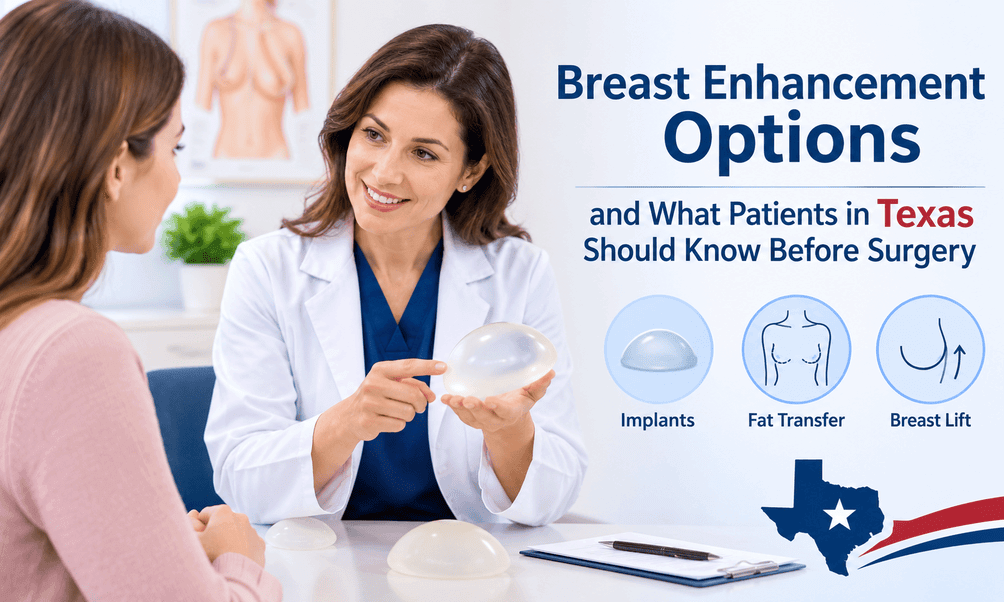
Breast enhancement procedures have become increasingly popular among individuals who are seeking to improve their appearance, restore breast volume, or achieve greater confidence. In the state of Texas, many patients consider breast enhancement surgery for cosmetic and reconstructive reasons. However, choosing the correct procedure requires careful research and a good understanding of the medical considerations involved.
“Before moving forward with the surgery, patients should understand the different options available, the risks associated with each procedure, and the importance of selecting a highly qualified surgeon,” says Matthew H. Steele of Matthew H. Steele, MD Cosmetic and Reconstructive Plastic Surgery.
Breast enhancement refers to a variety of cosmetic procedures that are designed to alter the size, shape, or appearance of the breasts. The most common procedures include breast augmentation with implants, fat transfer, and breast lifts. Each option offers different benefits depending on the patient's goals, body type, and medical history. Consulting with a board-certified plastic surgeon is essential for determining the most suitable approach for you.
Breast implants remain one of the most common breast enhancement procedures in Texas. During this operation, implants are inserted beneath the breast tissue or the chest muscles to increase breast size and improve symmetry.
Silicone implants are filled with silicone gel and are known for providing a very natural look and feel. Many patients prefer silicone implants because they closely resemble natural breast tissue. However, silicone implants may require periodic imaging tests to ensure they remain intact.
Saline implants are filled with sterile salt water. They are typically inserted empty and then filled once placed in the body. If a saline implant ruptures, the body naturally absorbs the saline solution. The choice between silicone and saline implants depends on personal preferences, anatomy, and your surgeon's recommendations.
Fat transfer breast augmentation is an alternative option for patients seeking a more subtle increase in breast size. This procedure involves removing fat from another area of the body through liposuction and injecting it into the breasts. Many patients are attracted to this method because it uses the patient's own fat rather than artificial implants. However, fat transfer procedures generally provide more modest results compared to implants. Some of the transferred fat may also be reabsorbed by the body over time.
A breast lift, which is also known as mastopexy, focuses on improving breast position rather than increasing size. This procedure removes excess skin and tightens surrounding tissue to create a firmer and more youthful appearance. Patients who experience sagging due to aging, pregnancy, or weight loss may benefit from a breast lift. In some cases, a breast lift can be combined with implants to achieve both enhanced volume and improved shape.
Before undergoing breast enhancement surgery, patients should carefully evaluate several important factors.
Breast enhancement surgery offers several options for patients seeking cosmetic improvements, increased confidence, or reconstructive benefits. Whether considering implants, fat transfer, or a breast lift, patients in Texas should take time to research procedures, understand the risks, and choose a qualified surgeon carefully.
Making informed decisions before the surgery can significantly improve both safety and satisfaction with the final results. Schedule a consultation with a reputable plastic surgeon today to discuss your goals, review your options, and determine the best approach for your personal needs.
You must be logged in to post a comment.
Explore our curated selection of various articles in this category

Integrative medicine combines conventional and holistic care. See how a St. Petersburg clinic blends...

Holistic care can get expensive fast. See what's genuinely affordable, what isn't, and how to find c...
Sarcoma cancer may be rare, but awareness is essential. Because its symptoms are often subtle in the...